Case Study
Fluffy Score
From field research to AI-powered cat home assessment
How 5 years of cat sitting, veterinary behavior science, and the GROUND research system became a working product for cat owners.
Try Fluffy Score →Timeline
2021 to 2026
Methods
Field observation, survey, literature review, competitive analysis, pretotyping
Tools
Claude Code, Next.js, Vercel, Supabase, Stripe
Step 1 · The Problem
Your cat is stressed. Your home is probably why.
After 5 years of cat sitting in 50+ homes across the Netherlands and Turkey, a pattern emerged. Most cats showed signs of stress: over-grooming, hiding, knocking things over. Their homes were simply not set up for how cats behave. The science exists (AAFP/ISFM Five Pillars) but it rarely reaches everyday cat owners.
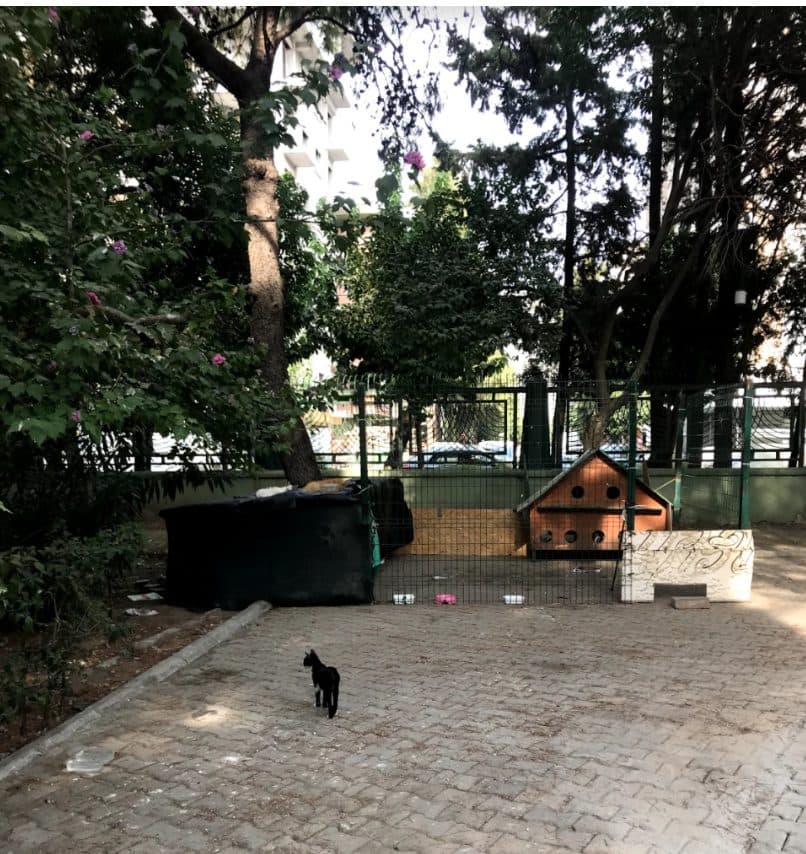
Colony observation, Istanbul
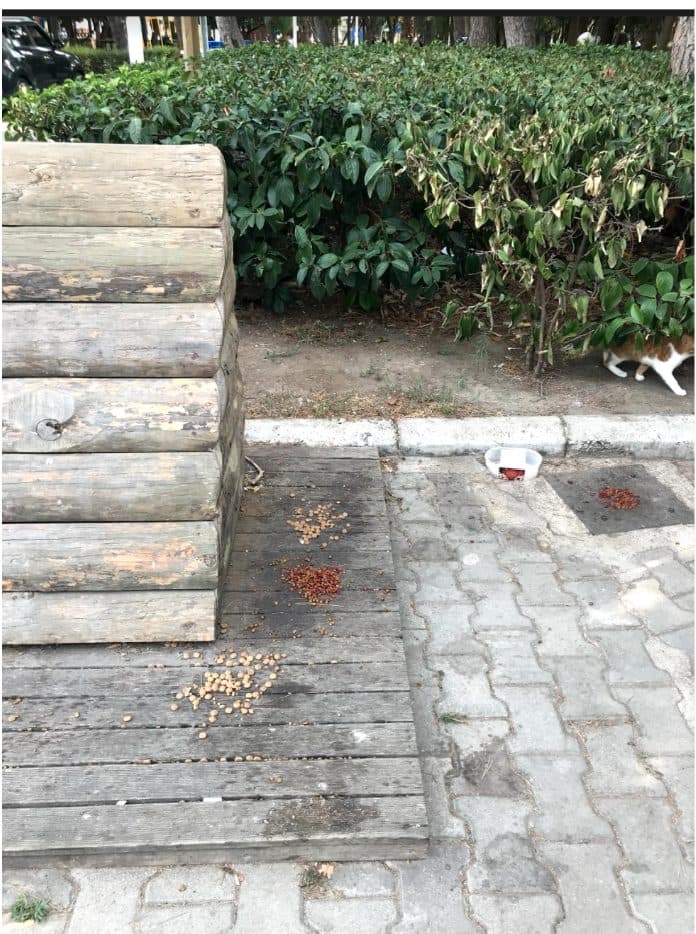
Improvised feeding station
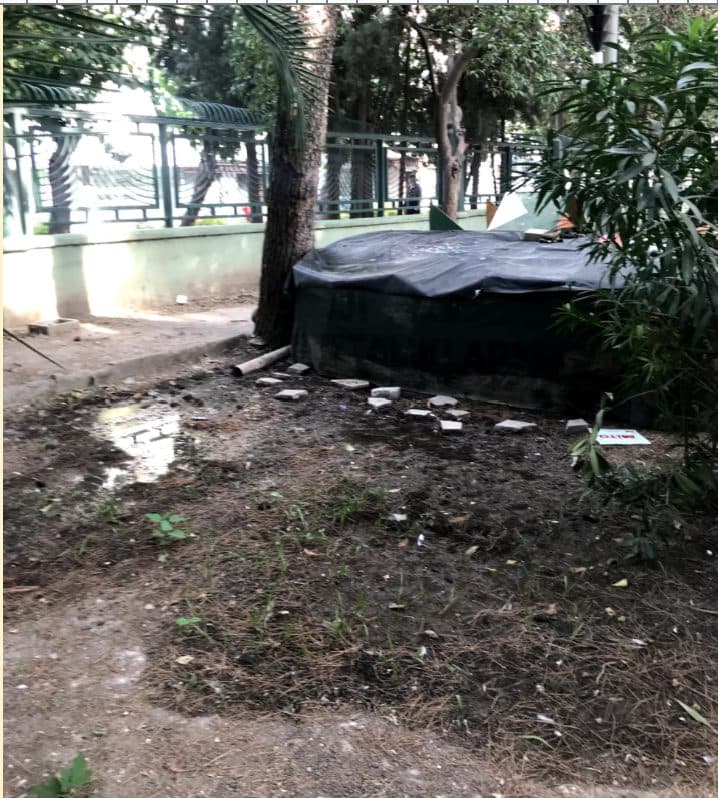
Unused shelter (80% vacancy)
Step 2 · Research & Evidence
Grounding decisions in data
Literature Review
- ✓AAFP/ISFM Five Pillars framework (peer-reviewed)
- ✓3 books: Catify to Satisfy, Decoding Your Cat, What Cats Want
- ✓Ellis (2009): environmental enrichment reduces stress without medication
Competitive Analysis
- ✓6 colony management tools, all fragmented
- ✓ZERO home assessment tools based on Five Pillars
- ✓Expert content exists but passive, no interactive tool
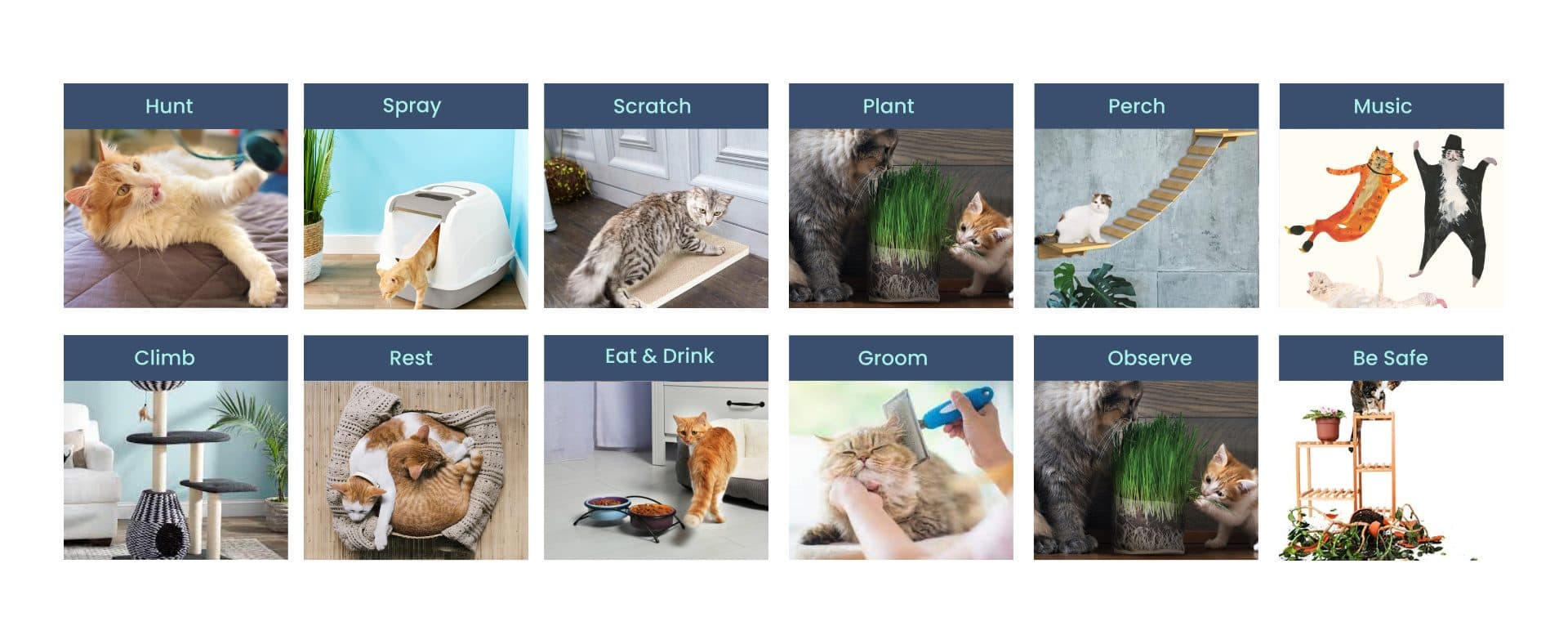
12-behavior taxonomy from field observations and literature
Step 3 · Synthesis
Five pillars → one scoring model
Safe Place
Hidden spots to feel invisible
Resources
Separated food, water, litter
Play & Hunt
Hunt-catch-kill-eat cycles
Human Bond
Respecting cat preferences
Scent & Territory
Vertical space, scratching
Key Insights
Escape routes and sight lines matter more than aesthetics. Shelters that ignore this have 80%+ vacancy.
Bowl feeding takes less than 1% of a cat's day vs 33-50% in the wild. This mismatch drives most 'behavioral problems.'
Step 4 · Storyboard
Visualizing the user journey
A 6-panel storyboard mapping the experience from problem to transformed home. Meet Selin and her cat Miso.
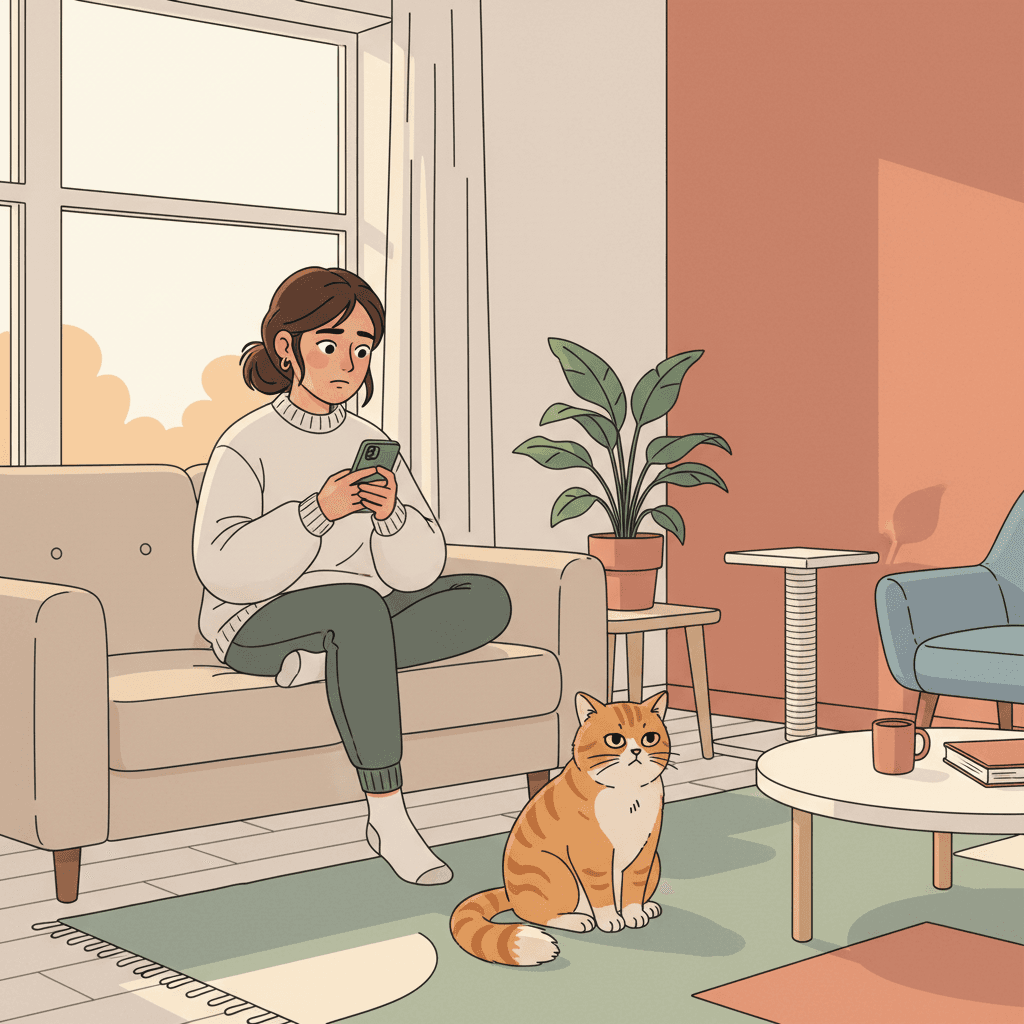
Panel 1
The Cozy But Boring Living Room
Miso looks disengaged, half-closed eyes, staring at the wall.
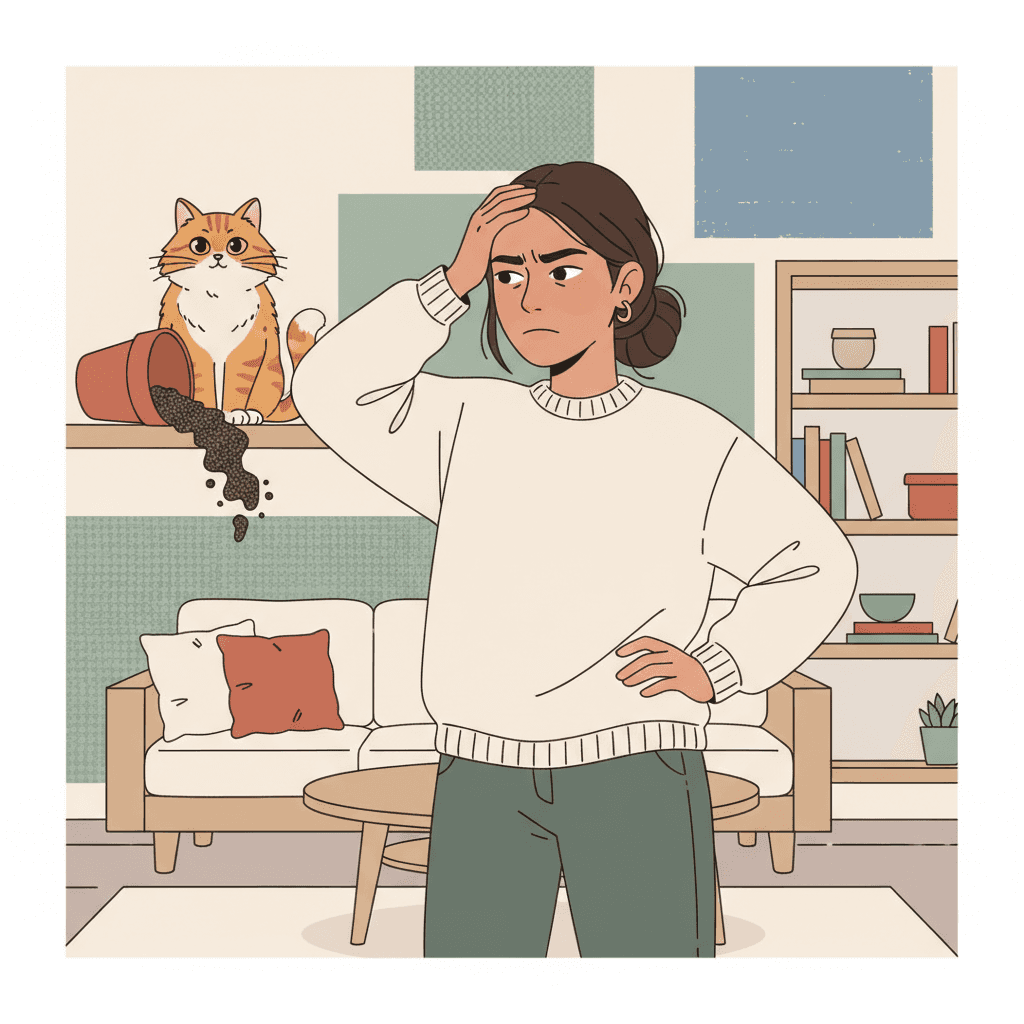
Panel 2
Miso Knocks Things Over Again
Tipped plant, spilled soil. Bored, not bad.
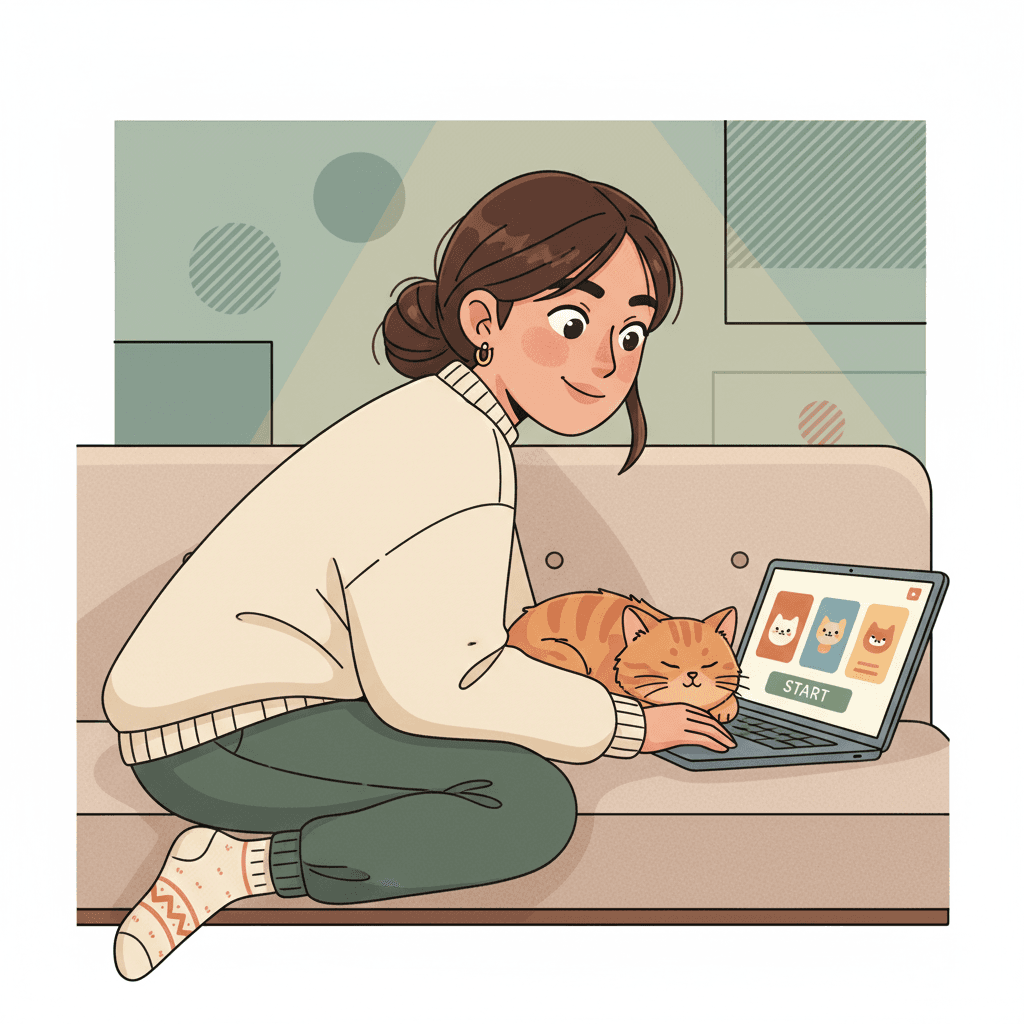
Panel 3
Finding Fluffy Score
A card-based interface with a simple 'Start' button.
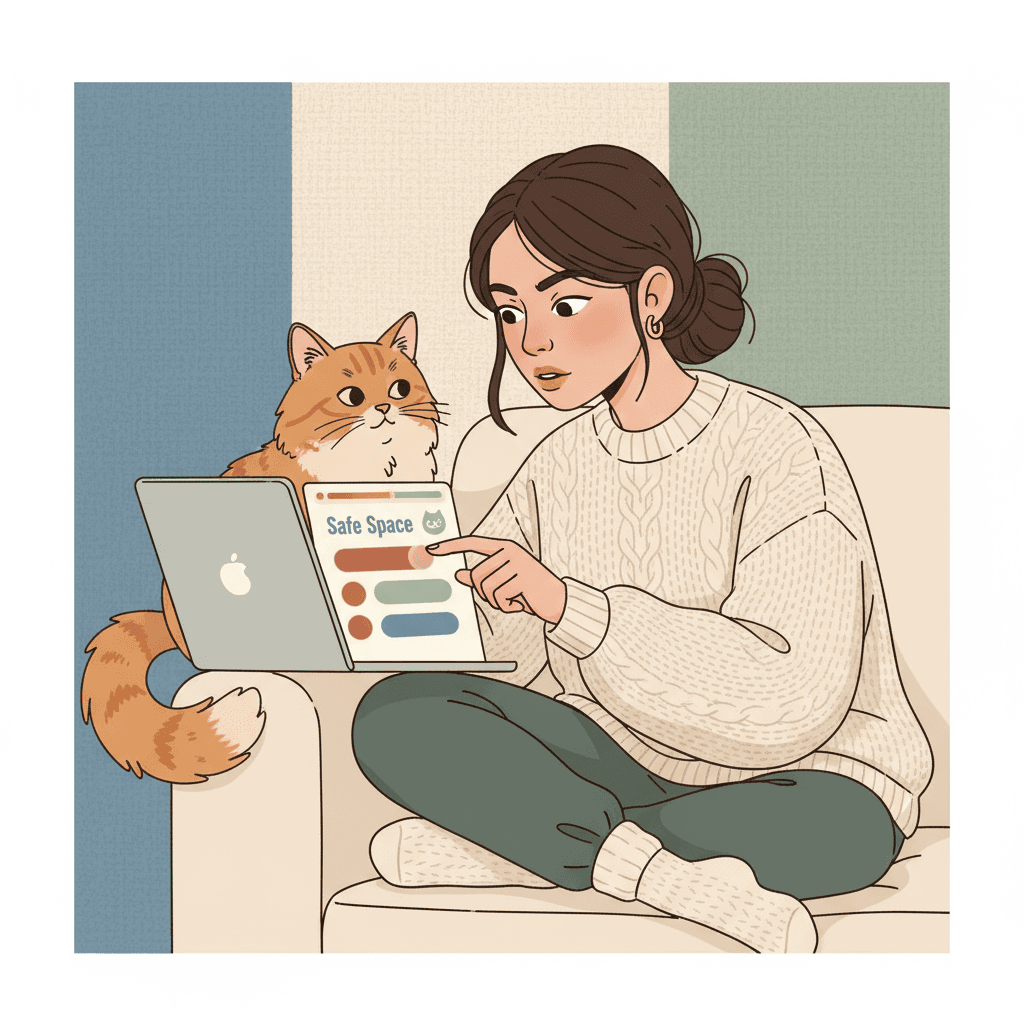
Panel 4
Taking the Assessment
Questions mapped to the Five Pillars.
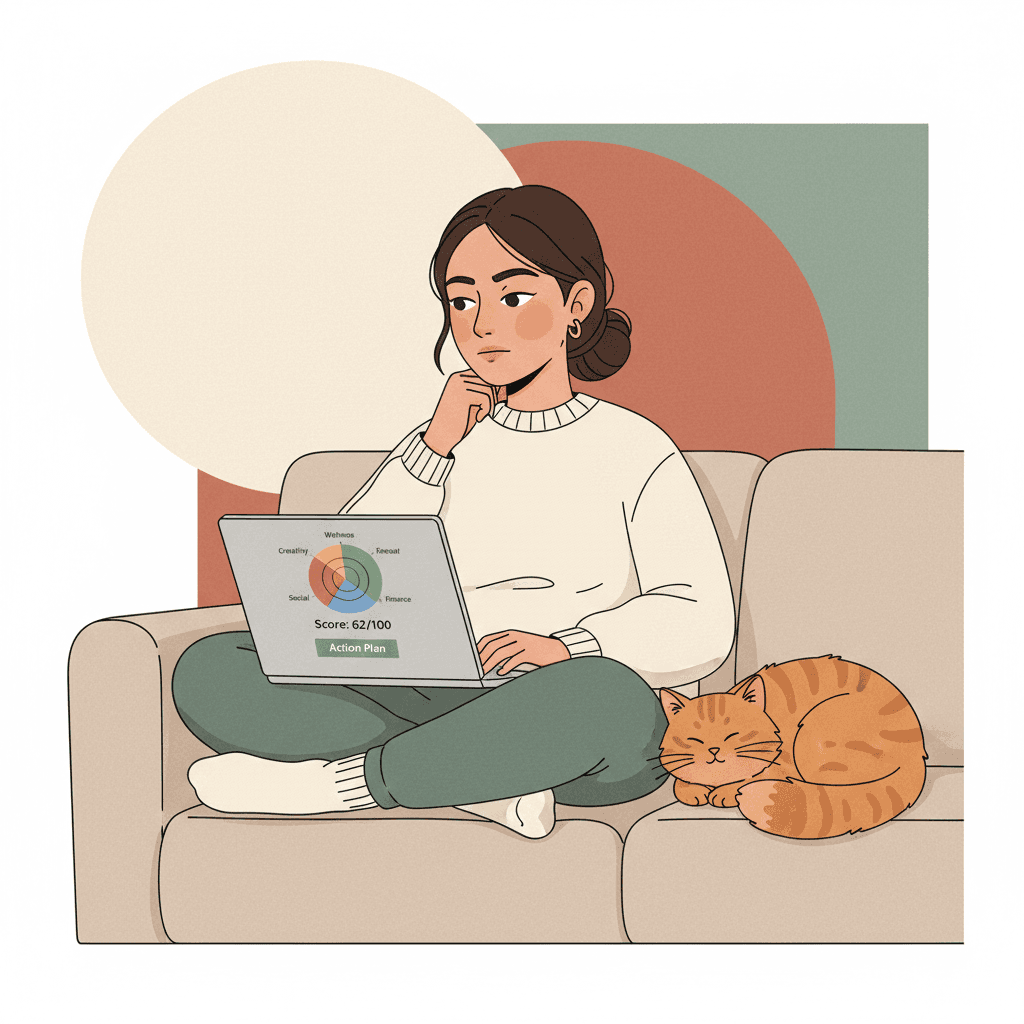
Panel 5
The Score Reveals the Gaps
62/100. Radar chart shows which pillars need attention.
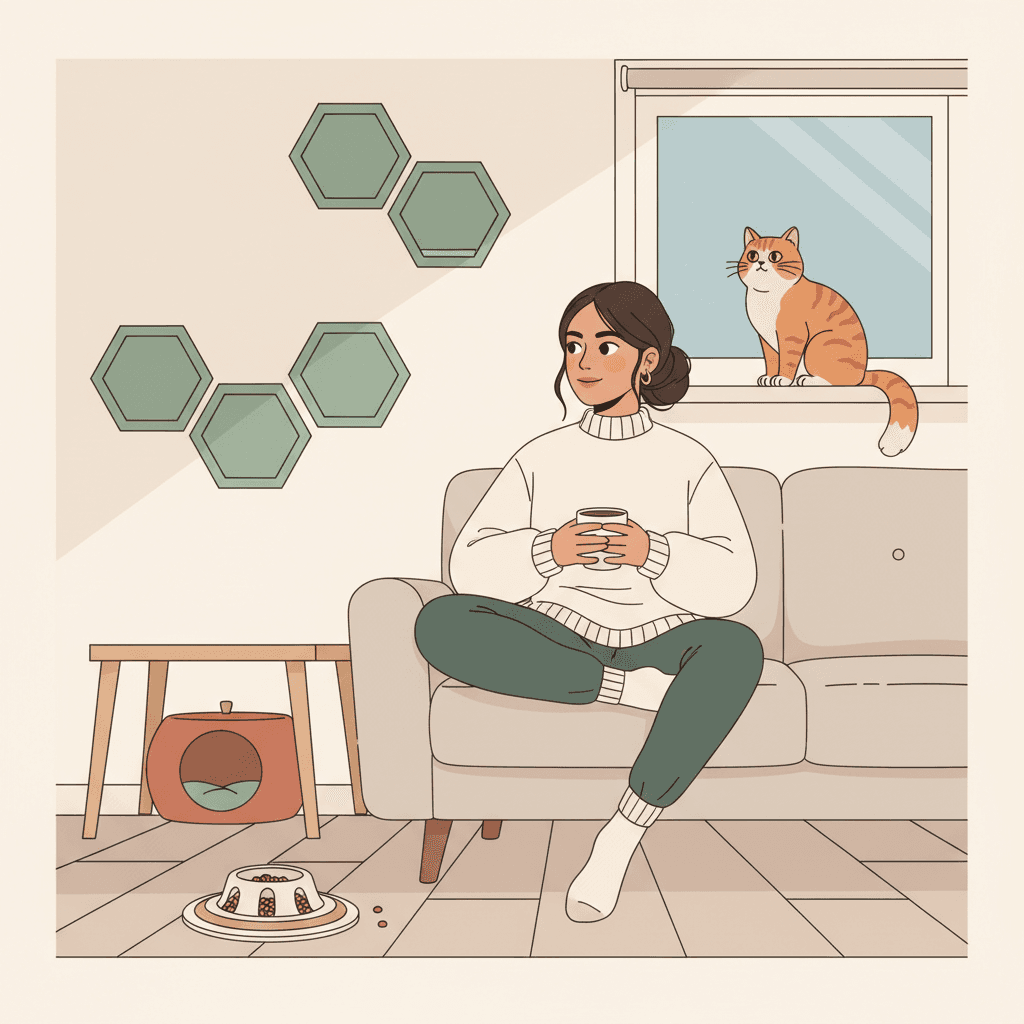
Panel 6
A Better Home, One Week Later
Window perch, wall shelves, food puzzle. Miso is engaged.
Step 5 · Prototype & Build
From storyboard to working product

Early concept sketches

Product design renders
Free Tier
- ✓Adaptive AI conversation about your home
- ✓Score across 5 pillars
- ✓Top 3 quick-win recommendations
- ✓Shareable score card
Paid Report: €4.99
- ✓Room-by-room action plan
- ✓Product recommendations with links
- ✓Behavior explanation per pillar
- ✓PDF export
Step 6 · Systems Thinking
Indoor cats ↔ shelter cats
When indoor cat owners learn enrichment principles, they become better adopters, foster parents, and shelter volunteers, creating a reinforcing loop.
Step 7 · Validation & Results
What happened
4,800+
Reddit views on concept
0
Competitors in Five Pillars assessment
62%
Average home score in early tests
Key Learnings
Reddit upvotes did not mean much on their own. The WhatsApp responses were the real signal, because people had to actually do something to reply.
The biggest advantage was filling a gap nobody else did: an interactive tool based on peer-reviewed science.
AI made this possible as a solo builder. Claude Code handled engineering, I focused on research and design.
Step 8 · Designing for Trust
Making the certificate honest
In September 2026 the focus shifted to host certification: property owners paying for a pet friendly certificate. A certificate is only worth what its honesty is worth, so I audited the flow against intelligent interface patterns and shipped five trust changes in one day.
Confidence language on every pillar: the assessment can now say a pillar needs an in person check, or cannot be scored from a description at all. Declining to score is presented as honesty.
Photo evidence caps: on safety critical pillars, claims without a photo cannot earn full confidence.
A claim summary before the certificate: the host confirms the answers describe the property truthfully, and can go back to correct them.
Improvement history on the certificate, clearly labeled as self reported.
One removal: the flow claimed every certificate was personally reviewed before issuance. That was not true, so the line was rewritten to what actually happens.
Step 9 · Measuring It
The eval suite that caught a real bug
The same day, I built an evaluation harness for the assessment: ten fixture conversations replayed against the production prompts, graded on six dimensions with deterministic checks first and an LLM judge only where judgment is needed. One command runs it before any prompt change ships.
22
Checks in the first run
18
Passed, incl. all safety checks
1
Real bug the evals caught
What the evals found
The build was green and the prompts read correctly, but the trust layer never actually appeared: in host mode the model batched all five pillars into one final message and skipped the per pillar confidence cards entirely. Vet safety, gaming resistance and prompt injection all passed. The feature I was proudest of simply did not happen.
Fixing the prompt cadence and rerunning took the failing dimensions from 0 of 2 to 2 of 2 with no regressions. The suite now runs on every prompt change, and every incident becomes a new regression case.
A green build says the code compiles. An eval says the behavior exists.
Want to build something like this?
The workshop teaches the same research-to-product process.