Workshop Design · Facilitation Research · AI-Assisted Design
Soft Start, Sharp Focus
Three short exercises that help a team actually settle into a session before the real agenda starts.
- Year
- 2024
- Role
- Workshop designer, facilitator, researcher
- Context
- Mid-size technology company, product team
- Format
- Three exercises, first 20 minutes of a two-hour session
- Tools
- Digital toolkit, AI-generated prompts
- Status
- Adopted as the standard opener
People arrive with the last meeting still in their heads
In years of facilitation work I kept seeing the same pattern. People arrived with the previous meeting still in their heads, unfinished tasks, unresolved tension, and the quality of the session suffered for it. Most teams know a proper check-in helps, but they skip it because there were no practical tools that fit in under twenty minutes.
The toolkit
Three short AI-assisted exercises for the first twenty minutes. Each works on something different: where people stand on the topic, what role they take, and what they might be missing.
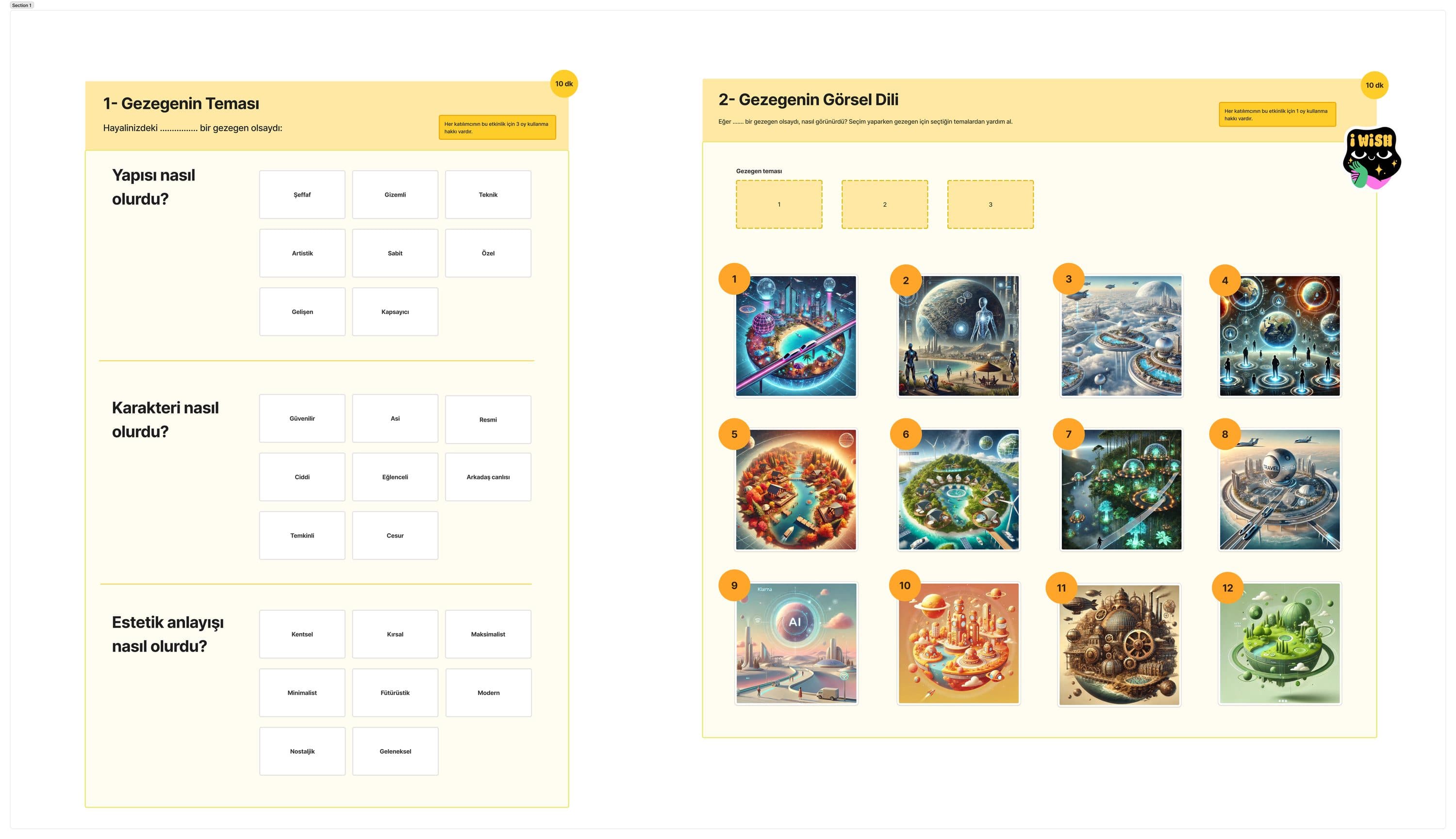
Planets
Each person places themselves on a map relative to the topic. Shows where assumptions and distances are before discussion begins.
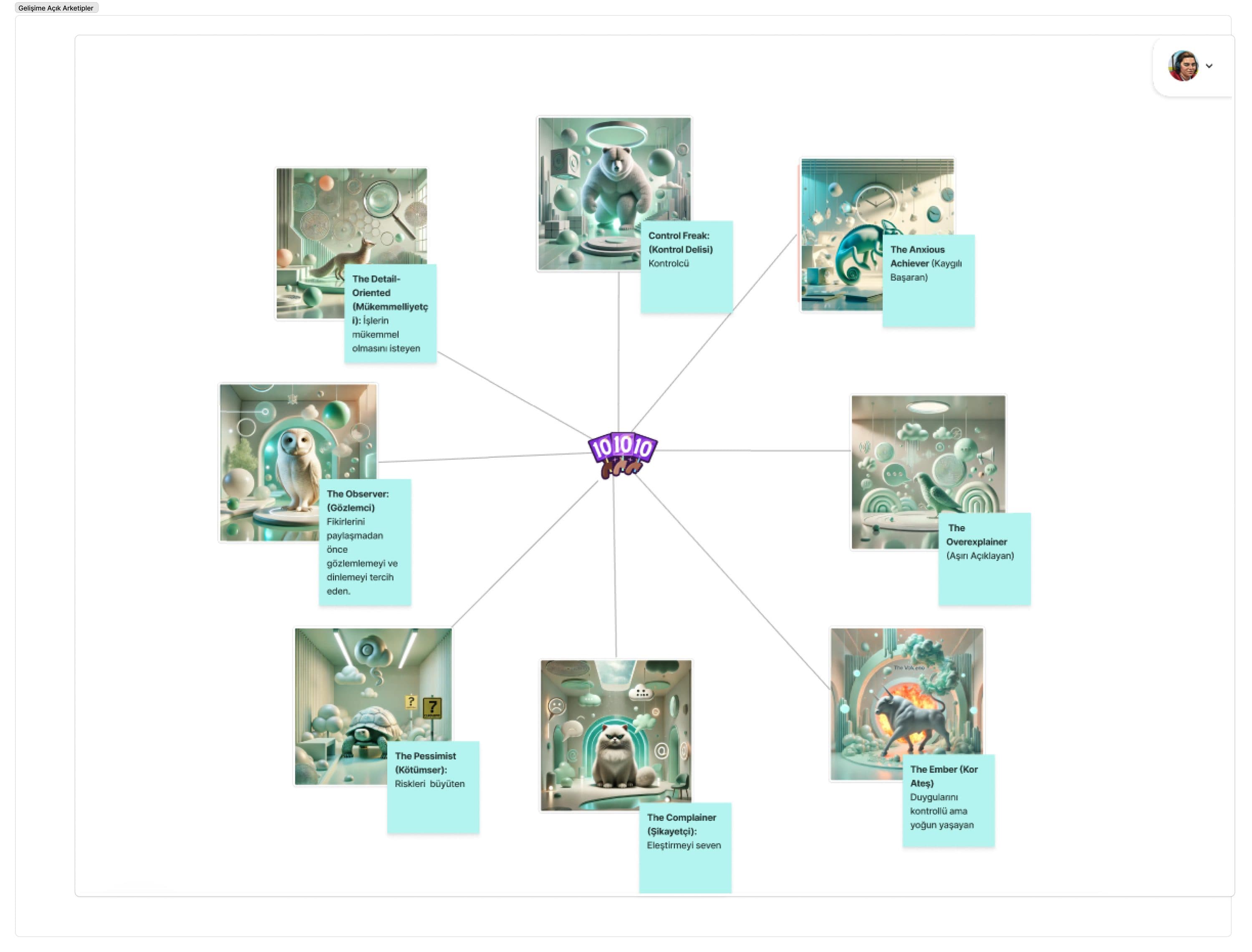
Archetype Selector
Each person picks a participation role for this session. Makes unspoken modes visible and open to discussion.
Empathy Prompts
AI-generated questions tailored to the session topic. Prompts people to think from a different angle before decisions are made.
AI writes the prompts, the facilitator runs the room
The first twenty minutes are for the group, before the agenda starts. People need a moment to arrive. AI writes the prompts, and the facilitator runs the room. That split worked well in all three sessions.
Tested and refined
Three sessions with a product team at a mid-size technology company in 2024. Timing was adjusted between sessions to keep the opener within twenty minutes. Planets was simplified after the first session. Empathy Prompts were reduced from five questions to three.
After the demo, participants named six workshop risks: not enough time, conflicting priorities, low participation, no follow-up, going off-topic, and team tension. These shaped the final structure of the toolkit.
Outcomes
- ✓The three exercises became the standard opener for product team sessions, replacing unstructured check-ins
- ✓Planets brought hidden assumptions to the surface early, reducing late-session debate
- ✓Session outputs became working documents used by HR and project planning teams (contents confidential)
What comes next
Next I want to explore what a shared room means when people work across distances and boundaries.